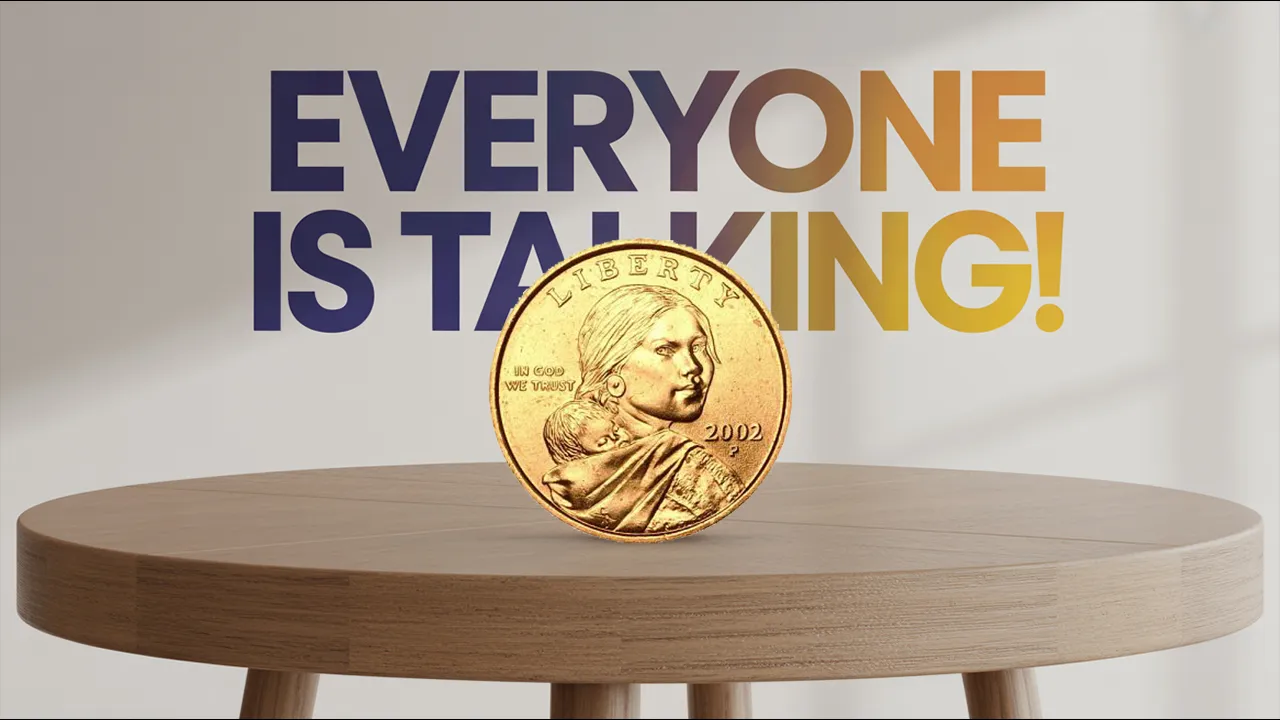
Unexpected coin discoveries often turn ordinary moments into stories that quickly travel across social media. Something similar happened when a family in the Midwest found a 2002 Sacagawea Dollar hidden inside their old piggy bank, untouched for years. What looked like a regular golden-colored coin soon became a conversation starter among collectors—mainly because Sacagawea Dollars from certain years and conditions are known to spark excitement in the numismatic community.
The incident shows how everyday savings jars, donation boxes, and coin rolls still hold surprises. And this particular find became a reminder that rare or high-grade coins don’t always come from auctions—they can appear in the most unexpected places.
A Simple Piggy Bank Discovery That Went Viral
According to the family’s account, the coin was discovered while emptying a childhood piggy bank that had been stored in the attic. Most of the coins inside were common quarters and pennies. But among them was something that looked slightly different—a warm golden tone, smooth edges, and a portrait that stood out.
Once they wiped away the dust, they realized it was a 2002 Sacagawea Dollar, also known as the “Golden Dollar.” The year itself isn’t extremely rare, but certain conditions, mint marks, and strikes can make some examples valuable to collectors.
The family shared a picture of the coin online, and within hours, collectors started analyzing every detail—its shine, rim, finish, and potential grade. The post soon gained traction, drawing thousands of comments and shares.
Why Sacagawea Dollars Still Capture Attention
The Sacagawea Dollar series, introduced in 2000, was designed to celebrate Native American heritage and honor Sacagawea, the Shoshone woman who guided the Lewis and Clark Expedition. The coin’s distinctive golden color is not real gold but a manganese-brass composition that gives it a unique appearance.
While millions were minted, coins from early 2000–2003 are often checked carefully because some have unusual strikes, satin finishes, or limited releases intended mainly for collectors.
Even though most circulating Sacagawea Dollars hold their face value, certain conditions elevate a coin’s status:
- High-grade, near-flawless pieces
- Coins from collector-only mint sets
- Off-center or double strikes
- Unusual planchet errors
- Coins preserved in original shine
This piggy bank example caught attention because of how well-preserved it appeared, despite being stored casually for decades.
What Made This 2002 Coin a “Collector’s Dream”
When collectors looked closely at the shared photo, several features stood out:
1. Exceptional Condition
Coin enthusiasts noted that the coin seemed to have extremely minimal wear. Many compared it to coins straight from mint sets, which are typically handled only by machines.
2. Strong Strike and Luster
The sharp details on Sacagawea’s portrait and the eagle on the reverse suggested the coin might be a high-grade example. High-luster pieces often receive top grading scores like MS66, MS67, or higher—levels that can sometimes command significant value among collectors.
3. Potential Mint Set Origin
Several commenters suggested that the coin might have originally come from a U.S. Mint collector set before ending up in circulation. If true, it would make the find even more unusual.
Because of these factors, enthusiasts online started calling it a “collector’s dream,” referring more to its condition and unexpected discovery than confirmed monetary value.
How Common Coins Still Hold Surprises
The viral buzz encouraged many people to recheck their old jars and savings boxes. The story also highlighted a long-standing truth among collectors: rare coins don’t always announce themselves. They often hide quietly in everyday places.
Piggy banks, old wallets, inherited jars, and forgotten drawers remain some of the most surprising sources of valuable or unusual coins. Many people shared their own similar experiences online, adding to the excitement.
Should You Check Your Piggy Bank Too?
Experts say it’s always worth looking through old coins at home. While not every Sacagawea Dollar is rare, special varieties or well-preserved examples can be of interest. And since early 2000s coins are now more than 20 years old, high-grade circulated pieces may become harder to find.
Also Read:- Silver Coin Melt Value Surges in 2025 — Why Americans Are Rechecking Their Old Coins
FAQs
Q1. Is a 2002 Sacagawea Dollar rare?
Not all 2002 Sacagawea Dollars are rare, but coins in exceptional condition, or those with unusual minting errors, can attract collector interest.
Q2. How much can a 2002 Sacagawea Dollar be worth?
Most sell for face value, but high-grade coins certified by grading services may be valued higher by collectors depending on strike, luster, and condition.
Q3. Can Sacagawea Dollars still be found in circulation?
Yes, though not as commonly as before. They still appear in coin rolls, donation boxes, and occasionally in change.
Q4. How can I tell if my Sacagawea Dollar is valuable?
Look for strong details, sharp edges, bright luster, and any unusual strike errors. For an accurate assessment, professional grading is recommended.
Q5. Why did this piggy bank discovery go viral?
The combination of excellent condition, unexpected discovery, and collector curiosity made the story widely shared on social media.